
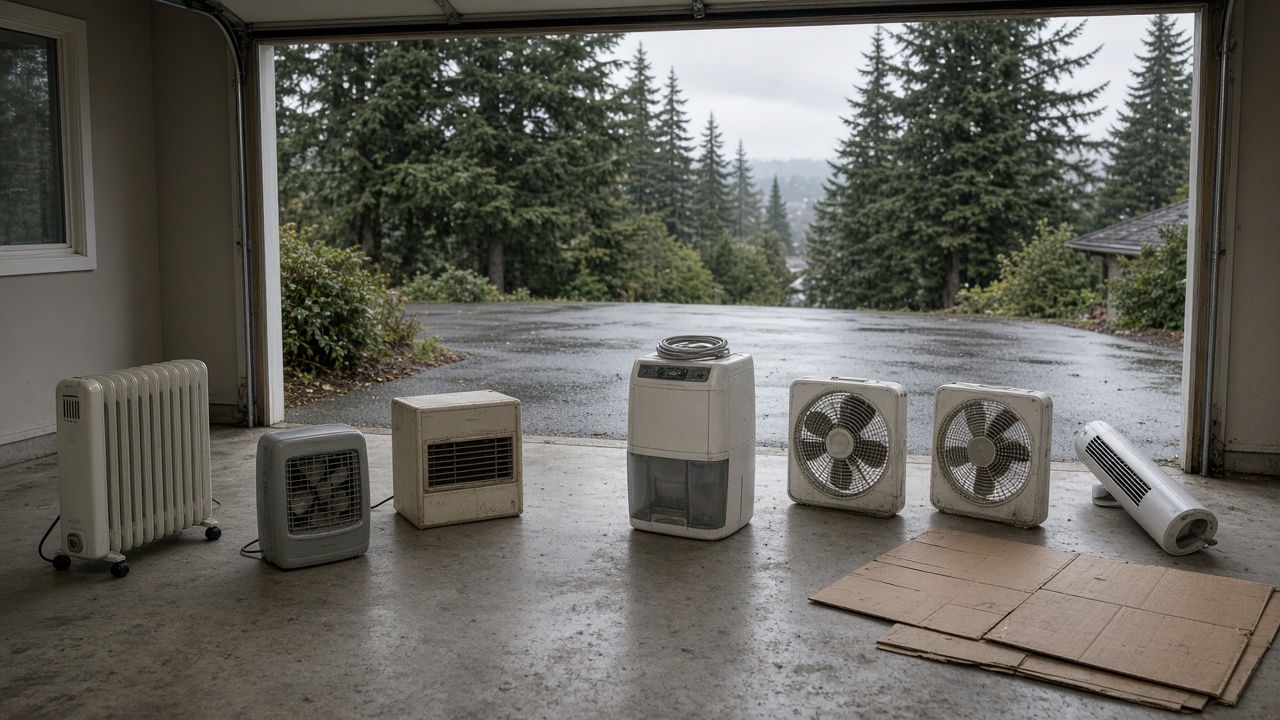
What to Group for One Pickup When Space Heaters and Fans Fail in Metro Vancouver
The ceramic heater is on the hall floor, cord still wrapped around the handle. You plugged it in last night. The light came on, the room stayed cold, and you set it back down. Behind it, the closet holds two heaters that have not worked since last winter, a box fan with a bent cage, and a dehumidifier with a dusty tank. It is Friday, November 20, in Metro Vancouver. Rain is on the garage door.
This post is that small-appliance pile: portable heaters, fans, dehumidifiers, and other worn plug-in units in closets, basements, and garages. A fridge, stove, or freezer is covered separately in our haul the old fridge before holiday cooking guide. A washer and dryer are covered separately in haul the washer and dryer before Black Friday. A water heater or a full-size fridge that died earlier is covered separately in appliance removal before winter. Screens and computers are covered separately in old TV and electronics disposal. Damp boxes and furniture are covered separately in pre-rain basement cleanout. Paint cans and a mixed garage are covered separately in pre-rain garage cleanout.
Why November 20 is the window after the first cold nights
The heater test just happened. Across Metro Vancouver and the Fraser Valley, late November is when last year’s unit comes out of the closet. The one that heats can stay. The one that will not heat, will not stay on, or has a cracked case is the pile.
Rain and early dark are the conditions now. A fan or dehumidifier in an open carport takes on water overnight. The clocks fell back on November 1, so an after-work carry happens under a hallway light. Keep the stack indoors until the truck is there. Same-day or next-day pickup may be possible when the schedule allows. Share photos so the team can plan a stair or a strata elevator in Burnaby, Surrey, or Richmond.
The holiday week is close. Thursday, November 26 is US Thanksgiving, and Black Friday is Friday, November 27. Five heaters, two fans, and a dehumidifier will not fit one car once a stair is involved. Group them and book once.
What usually turns up once you plug the heater in
Walk the coat closet, the basement shelf, the garage corner, and the spare-room cupboard.
Portable heaters
Leave an oil-filled heater sealed. Do not drain it, and do not cut the cord. Say so when you book appliance disposal.
Dehumidifiers
Empty the tank in a sink if you can do it without a spill. Do not tip a full tank on the stair. A furnace or a hot-water tank belongs on the winter appliance guide linked above.
Fans
Bag loose pieces so they do not catch a stair rail.
Other worn small appliances on the same shelf
Leave a window unit or a portable air conditioner intact, and say so when you book. A screen or a computer goes through electronic disposal. Name a TV on its own.
Cords, power bars, and cardboard
The power bar stays with the appliance pile. One unit you can carry may be accepted at a local depot. Check your municipality before a curb drop or a depot trip. Rules differ across Metro Vancouver and the Fraser Valley.
Set these aside. Fuel, paint, aerosol cans, and any container you cannot name. Tell us when you book. Policies for specialty items can vary. Do not pour them out. If a battery slides out without tools, bag it alone and say so. Do not tape batteries to a heater.
Keep, donate, or haul
We recycle and donate when possible.
How to group them for one pickup
One stack, labelled in the photos.
Note an oil-filled radiator, a tank that still has water, and any unit still plugged in.
Keep the other piles named. A fridge, a washer, a stove, or a stack of boxes and furniture can leave the same day. Name them on the guides linked above. Leave them out of the heater stack if they are staying.
Leave each unit whole. Do not take a heater apart. Scrap metal removal is for a bare frame you have already separated. A whole appliance stays whole. Metals, plastics, and electronics go to recycling when the materials allow.
Rain, closets, and the strata stair
Keep the stack indoors, and clear the landing. Coastal rain soaks a cord and a fan motor overnight. Do not stage heaters on the porch, in the lane, or in the building garbage room. Check building and municipal rules before anything goes to the curb. In a basement suite, clear the stair so two people can pass.
Book the elevator apart from any delivery. In Yaletown and Coquitlam, name the floor when you book apartment junk removal. Leave a failed unit unplugged. Do not test it again on a power bar in a damp garage. In North Vancouver, say if a long exterior stair is part of the carry.
What you can prep before the crew arrives
A general pickup list is covered separately in how to prepare for a junk removal pickup.
Safe DIY prep:
Leave to the crew when you are unsure: a heavy oil-filled radiator on a stair, a full dehumidifier, a hardwired unit, and any carry above the ground floor.
One heater or a closet full
Situation: one dead ceramic heater, and the walk is straight. Lean toward a single-item pickup. If your municipality will not take it at the curb, leave it for the pickup.
Situation: heaters, fans, a dehumidifier, and a dead kettle go the same morning. Lean toward multiple items or residential junk removal. Name stairs or an elevator when you book.
Situation: a fridge, a washer, or a TV is in the same haul. Name each large piece on the guides linked above. A heater stays with appliance disposal.
Pricing is quoted by volume, and the firm price is confirmed on-site. Request a free quote, or see how volume quoting works on our junk removal page. Same-day junk removal may be possible when the schedule allows. Book while the pile is still in one stack.
Cold-snap appliance checklist
1. Walk the closet, the basement, the garage, and the spare-room cupboard
2. Keep only the heater or fan that still works and that you will use this month
3. Unplug the rest, coil the cords, and empty a dehumidifier tank if you can do it safely
4. Leave oil-filled heaters sealed, and set batteries, fuel, and unknown containers aside
5. Group heaters, fans, and small appliances into one indoor stack, off the porch
6. Name any fridge, washer, or TV leaving the same day
7. Photograph the stack, the stair or elevator, and the truck stop
8. Request a free quote and note heaters, fans, a dehumidifier, an oil-filled unit, stairs, or a strata
9. Clear the path so the closet can close before the next cold night
Ready to clear the dead heaters before the next cold night?
Dead space heaters, fans, and a dehumidifier do not need to fill the closet once the first cold nights have shown which units still work. November 20, across Metro Vancouver and the Fraser Valley, is a practical time to group that pile for one pickup before the rain and the holiday week. Go Junk Go handles that load as part of appliance disposal and residential junk removal, and we recycle and donate when materials allow. Pricing is quoted by volume, with the firm price confirmed on-site.
Get a Free Quote or call (604) 358-2328. We are available Monday to Sunday, 6:00 AM to 8:00 PM.
Prefer email? Reach us at info@gojunkgo.ca. Send photos of the heaters, the fans, the dehumidifier, and the path to the truck so we can plan the visit around your weather window.
Ready to Get Started?
Contact GoJunkGo today for professional junk removal services in Vancouver. We're here to make your cleanup easy and eco-friendly.
Get A Free QuoteRelated Articles
Clear Clutter From a Parent's Home Before Holiday Family Arrives in Metro Vancouver
A spare bed, a blocked hall, and boxes on the dining table at a parent's house? Sort what to keep, donate, or haul before family arrives in Metro Vancouver.
The Boxes Arrive With the Sale: Clear Packaging Before Black Friday in Metro Vancouver
Fridge boxes, foam inserts, and a pallet already in the hall, with more due after Black Friday? Plan the packaging haul before the rain in Metro Vancouver.
Clear Soaked Carpet and Swollen Furniture Before Basement Drying in Metro Vancouver
Soaked carpet, swollen particleboard, wet boxes, and drywall offcuts still covering the floor? Clear them so basement drying and repairs can start in Metro Vancouver.