
What to Haul When the First Fall Rain Soaks a Metro Vancouver Basement
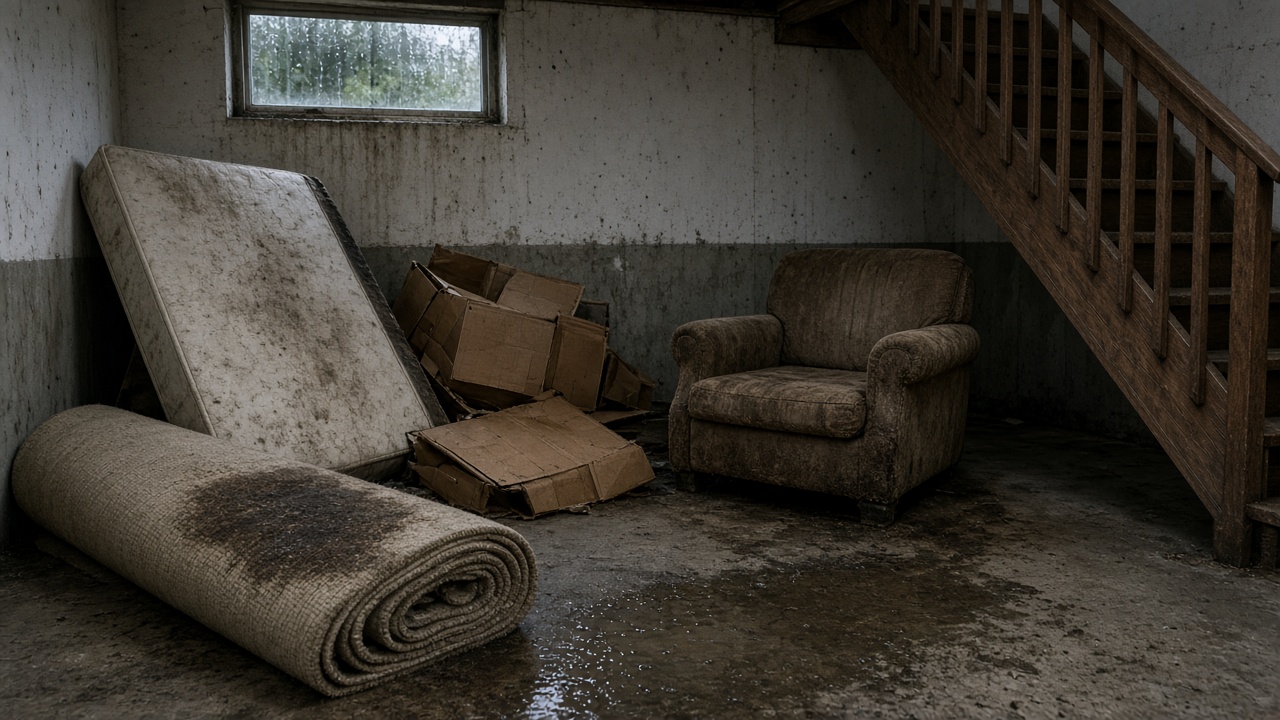
The carpet is dark along the wall, and the roll you started this morning is already heavy. A spare mattress leans in the puddle at the bottom of the stairs. Cardboard that held winter clothes has slumped open, and the armchair from the spare room sits in a ring of water. Late October in Metro Vancouver is when the first long rain stops being a forecast. Weather offices call that coastal rain an atmospheric river. On the ground it comes in at a window well, under a ground-floor door, or across a basement floor that was dry last week.
This post is the after plan: soaked carpet and pad, a mattress that sat in water, collapsed boxes, and furniture that cannot dry in place. A planned sort before the rains is covered separately in our pre-rain basement cleanout. Storage that is still dry under the house is covered separately in fall crawlspace cleanout. A fence or a shed the wind dropped outside is covered separately in November windstorm fence and shed haul. Do not drag the wet pile into the garage you cleared so the car can park, covered separately in park the car before winter, or into the room you are saving for December guests, covered separately in clear the spare room before Christmas.
Why the day after the first heavy rain matters
Wet porous things do not get easier. Carpet pad, a mattress, and cardboard take on water and then take on smell. On a coastal basement floor they rarely dry where they sit.
Daylight gets shorter on November 1. The clocks fall back. A stair carry after dark, with a slick tread and a soaked roll, is slower than a pickup booked while you can still see the water line.
The path out is the job. Stairs in a Vancouver house, a lane behind a Burnaby or Surrey home, or an elevator in a ground-floor suite all need a plan. Same-day or next-day pickup may be possible when the schedule allows. Share photos so the team can plan the stairs, the door, and what actually got wet.
What typically gets soaked
Walk the room only if the floor is safe. Stay out of standing water near an outlet or a breaker you cannot see. If water is still coming in from a pipe, a plumber comes before a haul. The crew takes what is already ruined.
Carpet and pad
Mattresses and soft furniture
Collapsed storage
Electronics and appliances that touched the water
Set these aside. Paints, solvents, fuels, pesticides, and unknown containers. Propane tanks vary by policy. Set them aside and tell us when you book. If the water smells like a drain backup, or you know it is sewage, that is outside a normal household haul. Say so before anyone loads it. If the floor is old tile or sheet vinyl and you suspect asbestos, leave it in place and tell us when you book.
Keep, dry, or haul
We recycle and donate when possible. Soaked cardboard and wet fabric usually cannot be recycled or donated. Pricing is quoted by volume, and the firm price is confirmed on-site. Request a free quote, or see how volume quoting works on our junk removal page.
What this visit covers
Ruined contents can leave. Carpet, a mattress, furniture, boxes, and appliances that sat in rainwater are a haul.
Drying the building is a different trade. Fans, moisture pulled out of a wall, and a rebuilt floor belong with a restoration company.
Wet drywall that has to come out is a different booking. Cutting out a water-damaged wall is separate from hauling a mattress. If the wall itself has to go, see drywall removal and name it when you book. Interior tear-outs are covered separately on our demolition page.
A ground-floor suite is still a contents haul. Stairs, a lobby, and an elevator booking change the timing. Apartment and condo loads are covered on apartment junk removal. Tell us the floor, the elevator rules, the stair width, and where the truck can stop.
What the next rain does if the pile stays
A wet roll at the bottom of the stairs gets heavier, and cardboard grows mold. A mattress that looked almost fine the first morning is a different object two days later.
Check your municipality’s rules before you set anything at the curb. Keep the pile inside your door until the truck is there. Some stratas book the elevator in short windows. Mention the building, the floor, and the booking window when you request the quote.
Leave the wet carpet out of the garage and out of the spare room. A damp roll will smell up whichever room you choose.
What you can prep before the crew arrives
A general pickup list is covered separately in how to prepare for a junk removal pickup.
Safe DIY prep:
Leave to the crew when you are unsure: a soaked mattress on a tight stair, a carpet roll you cannot lift, a fridge that stood in water, and anything beside a live outlet in a puddle. Leave appliances upright. Say what was submerged when you book.
Single item vs a full haul
Lean single-item pickup when one mattress or one chair is the only thing leaving and the stair is straightforward.
Lean multiple items or residential junk removal when carpet, furniture, and collapsed boxes share the day.
Lean appliance or electronic disposal when a fridge stood in the water, or the pile is a wet TV. Leave both unplugged and upright.
A bin is a different tool. If the dry-out turns into days of torn-out flooring and a longer reno, that choice is covered separately in bin rental or junk haul. See bin rentals if a bin fits the rebuild better. Same-day junk removal may be possible when the schedule allows.
Soaked basement checklist
1. If water is still coming from a pipe, call a plumber before you book a haul
2. Stay out of standing water near outlets, and leave wet electronics unplugged
3. Photograph the room, the water line, and the path to the truck
4. Sort what stayed dry from carpet, boxes, and furniture that sat in the water
5. Set paints, fuels, propane, and unknown containers aside, and say so when you book
6. Leave sewage, or anything that smells like a drain backup, out of the junk pile and tell us
7. Keep the wet roll out of the garage and out of the spare room
8. Request a free quote and note carpet, a mattress, furniture, appliances, stairs, or an elevator
9. Book before the next rain, while there is still a clear path out
Ready to clear the soaked basement before the next rain?
Carpet, a mattress, and boxes that sat in the first heavy rain do not need to stay in the house until the next system. Across Metro Vancouver and the Fraser Valley, Go Junk Go can take that wet pile as part of residential junk removal, and we recycle and donate when materials allow. Pricing is quoted by volume, with the firm price confirmed on-site.
Get a Free Quote or call (604) 358-2328. We are available Monday to Sunday, 6:00 AM to 8:00 PM.
Prefer email? Reach us at info@gojunkgo.ca. Send photos of the wet pile, the water line, and the path to the truck so we can plan the visit around your weather window.
Ready to Get Started?
Contact GoJunkGo today for professional junk removal services in Vancouver. We're here to make your cleanup easy and eco-friendly.
Get A Free QuoteRelated Articles
After November Windstorms: Haul Broken Fences and Collapsed Sheds in Metro Vancouver
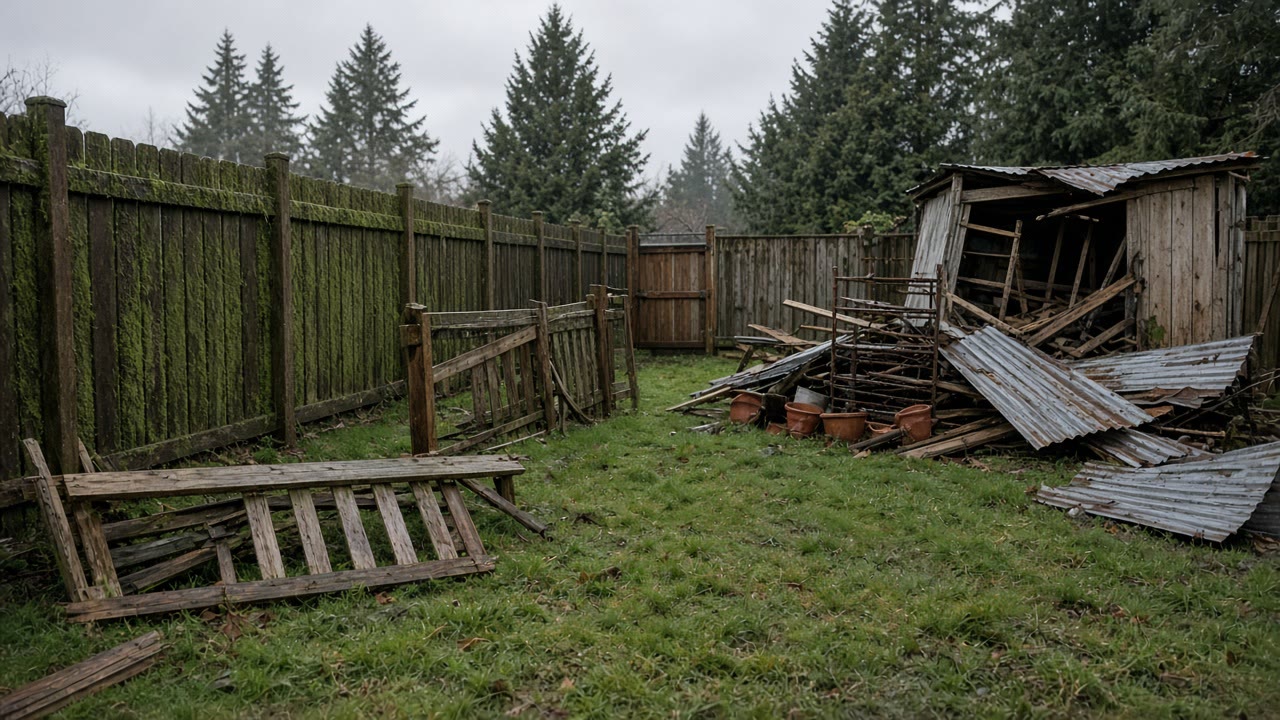
Fence panel on the lawn, or a shed that came down after November wind? Sort what to keep, set aside, or haul, and clear the pile before the next rain in Metro Vancouver.
Make Room Before Black Friday: Haul the Old Couch, Fridge, or TV in Metro Vancouver
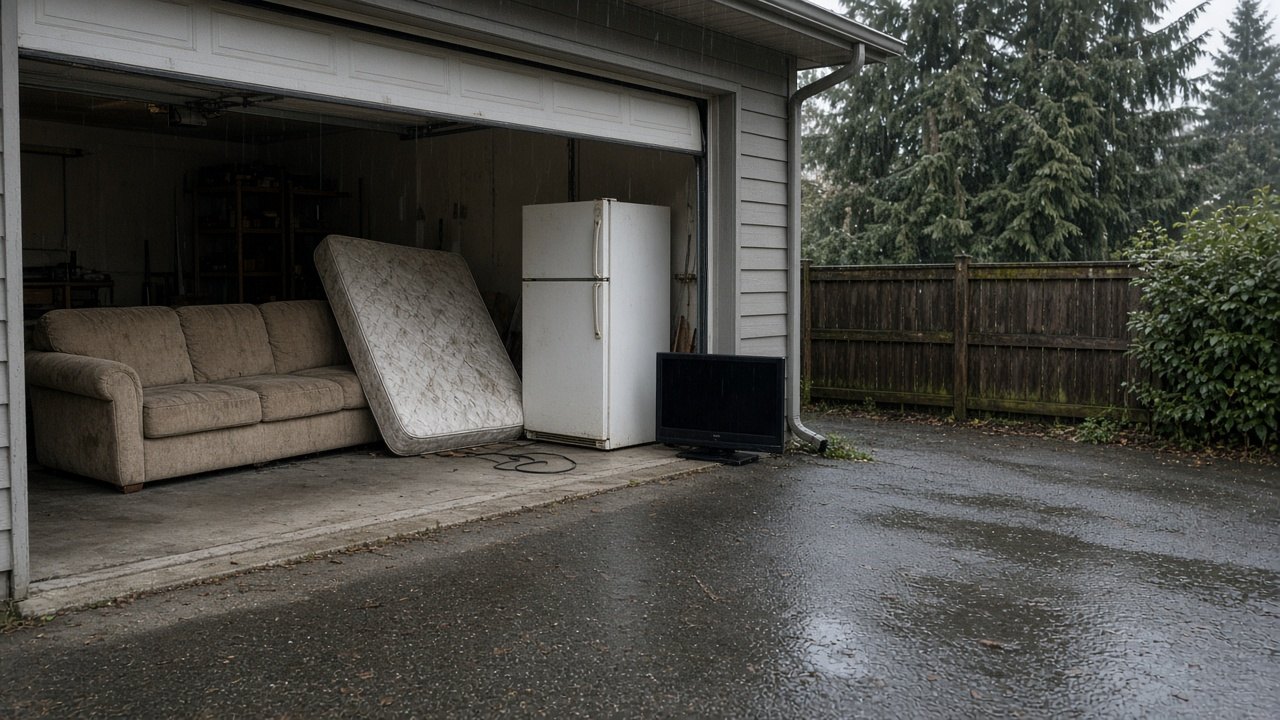
Couch, mattress, fridge, washer, or TV on order for Black Friday? Compare retailer haul-away with a separate pickup, and clear the old piece before delivery day in Metro Vancouver.
November 1 Move-Out: Leftover Furniture, Mattresses, and Junk in Metro Vancouver
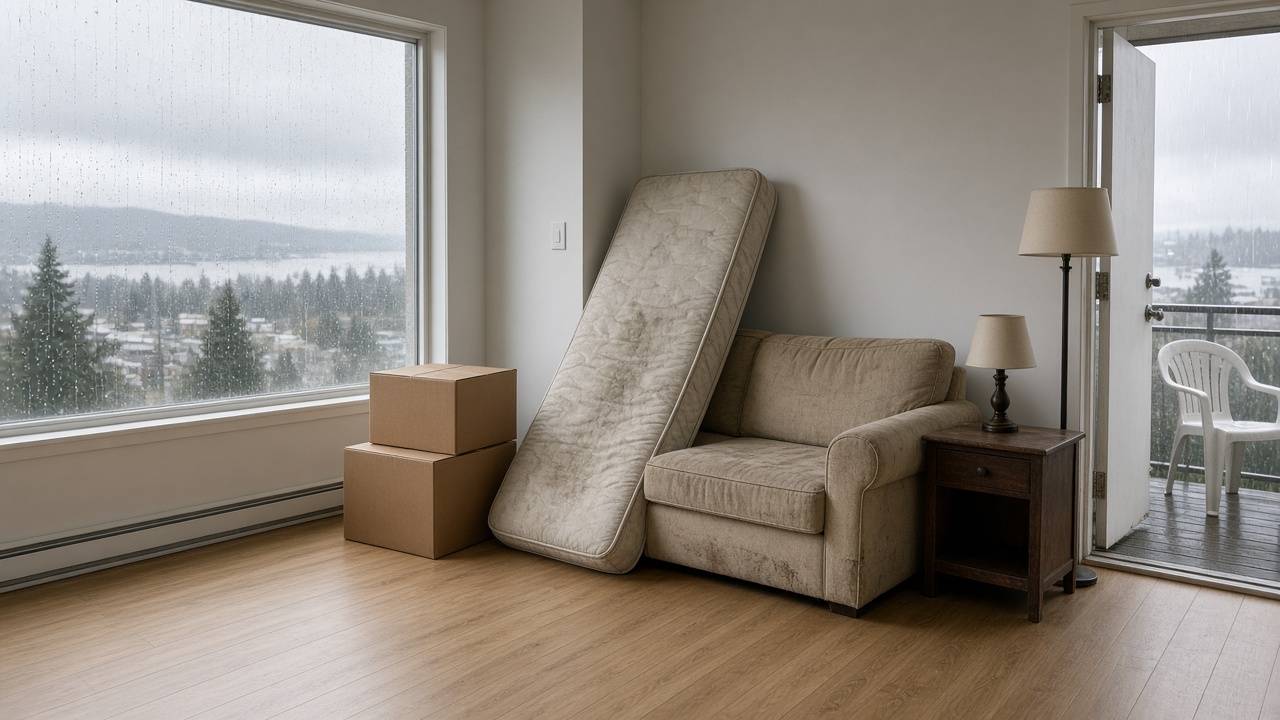
Lease ends October 31 and the next person starts November 1? Sort furniture, mattresses, and leftovers, book pickup before move day, and leave the unit empty in Metro Vancouver.